

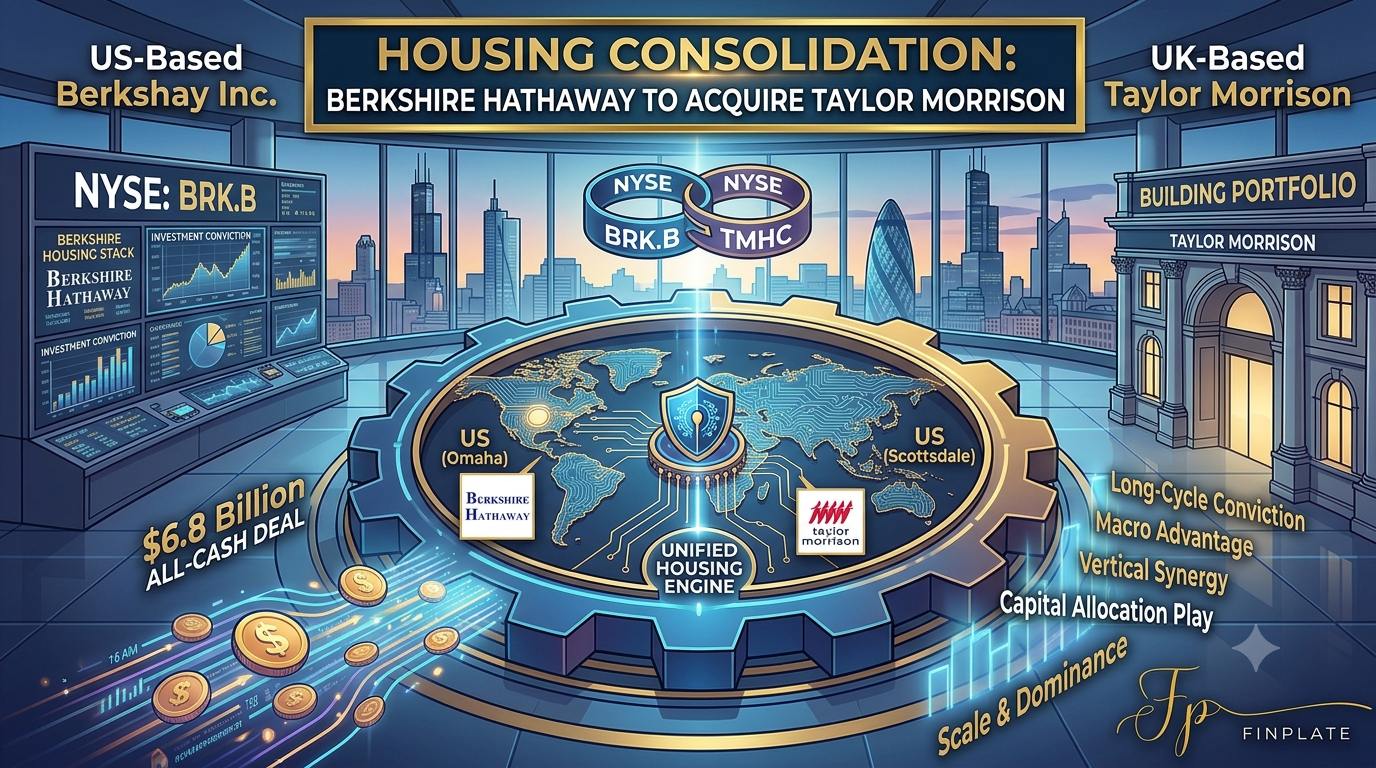

The North American residential infrastructure layer is witnessing a massive deployment of cash. In a blockbuster corporate maneuver, Omaha-based conglomerate Berkshire Hathaway Inc. and Arizona-based community developer Taylor Morrison Home Corporation have announced a definitive merger agreement.
Under the terms of the deal, Berkshire will acquire the homebuilder in an all-cash transaction valued at $72.50 per share.
The Deal by the Numbers:
- Equity Value: Approximately $6.8 Billion
- Total Enterprise Value: $8.5 Billion (including outstanding corporate debt)
- Market Premium: A massive 24% upside over Taylor Morrison’s undisturbed closing stock price of $58.50.
Beyond the sheer size of the numbers, this transaction marks a profound milestone: it stands as the first multi-billion-dollar corporate acquisition spearheaded by Chief Executive Officer Greg Abel since stepping into Berkshire’s top executive seat.
Transaction Mechanics & Corporate Evolution
To fund the acquisition, Berkshire Hathaway will draw directly from its record-setting liquidity reserves, which neared an unprecedented $400 billion earlier this year.
Because the transaction entirely bypasses traditional credit lines or new debt issuance, it has driven immediate upside for Taylor Morrison’s debt holders. In fact, S&P Global Ratings immediately placed the builder’s credit ratings on CreditWatch with positive implications.
Historically, Berkshire has maintained a famously hands-off corporate philosophy, allowing its acquired businesses to operate with absolute autonomy. However, this transaction signals an evolution in corporate strategy.
In an official statement detailing the acquisition, management highlighted an intent to gradually unify Berkshire’s site-built homebuilding operations into a combined, integrated platform. Rather than running a fragmented portfolio of siloed assets, Berkshire is moving toward structural integration.
Vertical Synergy: Completing the Housing Supply Chain
From an industrial standpoint, integrating
Taylor Morrison-
the nation’s sixth-largest homebuilder by volume-is a highly logical addition to Berkshire’s massive domestic footprint.
The conglomerate already owns a sprawling network of housing assets, creating an immediate opportunity for vertical synergy:
- Raw Materials: Berkshire owns core manufacturers like Acme Brick, Benjamin Moore paint, and Johns Manville insulation. Taylor Morrison communities now provide a massive, captive internal customer for these materials.
- Manufactured Footprint: The builder perfectly complements Berkshire’s existing manufactured housing giant, Clayton Homes.
- Financial Layering: Taylor Morrison operates robust internal mortgage, title, and insurance operations-perfectly matching Berkshire’s legacy strength in insurance and risk underwriting.
Crucially, Taylor Morrison brings an established geographic footprint spanning more than 350 communities across 21 high-growth markets in 12 states, targeting everything from entry-level buyers to built-to-rent communities.
Long-Cycle Conviction Amid Macro Volatility
For market observers, this multi-billion-dollar bet comes at a fascinating inflection point in the real estate cycle. The broader homebuilder equity sector has experienced intense crosswinds lately, driven by sustained interest rate pressures and affordability hurdles that have cooled near-term buyer traffic.
By deploying billions into a cyclical bottom, Berkshire is executing a classic long-cycle value capture play. The acquisition reflects a firm structural conviction that the underlying macroeconomic backdrop-characterized by a severe, multi-year deficit in domestic housing inventory-will ultimately overcome transient interest rate cycles.
The transaction is scheduled to close in the second half of 2026, subject to standard closing conditions and a vote by Taylor Morrison stockholders. Upon formal closure, Taylor Morrison will be delisted from the New York Stock Exchange and transition into a private subsidiary under the Berkshire umbrella. Current Chief Executive Officer Sheryl Palmer and her management team are slated to remain at the helm to guide the operational transition.
To track upcoming proxy statements, regulatory filings, or investor disclosures related to the formal shareholder vote, capital allocators can monitor the Taylor Morrison Investor Relations center directly.
Ultimately, this transaction demonstrates that while public market investors often flinch at short-term cyclical headwinds, mega-scale corporate capital values long-term structural dominance. By absorbing an elite national homebuilder into an existing raw material and financing ecosystem, Berkshire is positioning itself to capture massive economic rents when the broader real estate cycle turns.
Want to decode the complex mechanics of global finance and central banking policy without the dry, confusing jargon? Stay ahead of the curve and explore more human-friendly financial deep dives at Finplate.co